

Fire Resistance Testing – Ensuring Material Safety and Performance
Fire resistance testing helps determine how materials react when exposed to heat and flames. These tests provide valuable information regarding flammability behavior, heat release, smoke generation, ignition characteristics, and overall fire performance.
Why Fire Resistance Testing Is Important?
Fire testing enables manufacturers and product developers to:
- Assess material behavior under fire exposure
- Meet regulatory and safety requirements
- Compare formulations and materials
- Improve product design and performance
- Support certification and quality control
Understanding fire performance at an early stage can significantly reduce risks and improve material reliability in real applications.
Fire Resistance Tests Offered at CoatEdge Dynamics
1. Cone Calorimeter Test ISO 5660
The Cone Calorimeter is one of the most widely used techniques for evaluating a material’s reaction to fire.
How it works:
- The sample is exposed to controlled radiant heat flux
- Ignition and combustion behavior are monitored
- Heat release and smoke generation are measured
Key parameters evaluated:
- Heat Release Rate (HRR)
- Total Heat Released (THR)
- Time to Ignition (TTI)
- Mass loss rate
- Smoke generation
2. Smoke Density Test ISO 5659
Smoke can often pose a greater danger than flames themselves because it reduces visibility and may contain hazardous gases.
How it works:
- Material samples are exposed to heat or flame conditions
- The amount of smoke generated is measured
Key outcomes:
- Optical smoke density
- Smoke generation characteristics
Applications:
- Building materials
- Transportation interiors
- Plastic components
- Cable systems
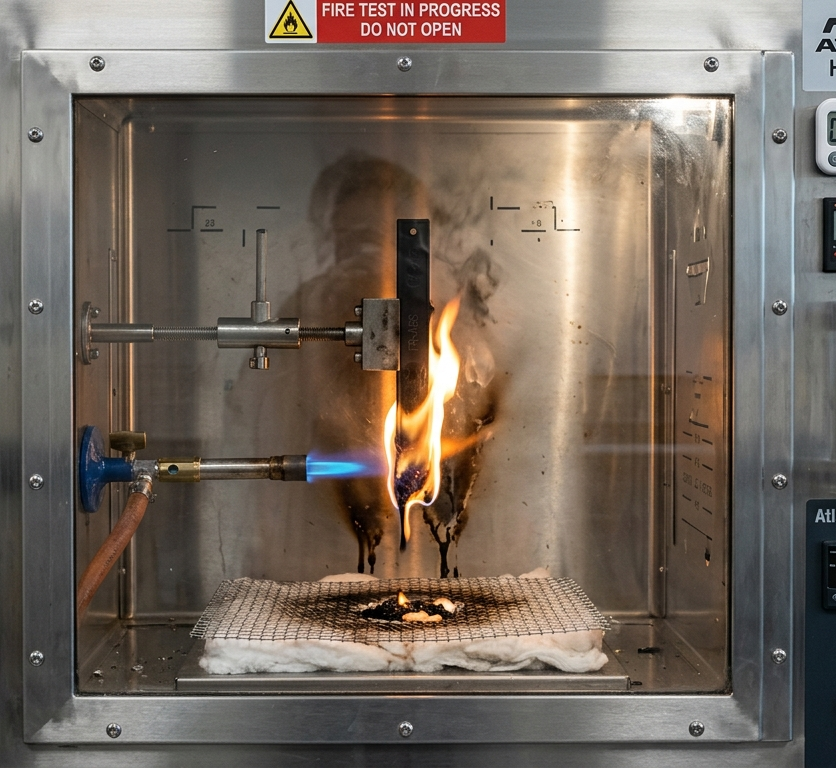
3. UL 94 Vertical Burning Test
The UL 94 test is commonly used for plastics and polymeric materials to classify flammability performance.
How it works:
- A vertically positioned sample is exposed to a controlled flame
- Burning behavior after flame removal is observed
Common classifications:
- V-0
- V-1
- V-2
4. Limited Oxygen Index (LOI) Test (ISO 4589)
The Limited Oxygen Index test determines the minimum concentration of oxygen required to sustain combustion.
How it works:
- The material is placed in a controlled oxygen/nitrogen atmosphere
- Oxygen concentration is adjusted until continuous burning occurs
CoatEdge Dynamics – Your Partner for Fire Performance Evaluation
At CoatEdge Dynamics GmbH, we provide customized fire testing solutions with detailed analysis and reporting to support product development, regulatory compliance, and quality assurance.
Whether you are developing fire-retardant coatings, plastic materials, or building products, our testing expertise helps you understand material behavior under fire exposure and optimize performance for real-world applications.