

DTM Coatings & Humidity Resistance – Why It Matters
Humidity is one of the most challenging environmental factors for protective coatings. It can penetrate the coating film, reduce adhesion, and eventually lead to blistering and premature coating failure.
Why Coating Testing Matters?
Protective coatings are the frontline defense against corrosion. But not all coatings perform equally under various environmental conditions. Through accelerated aging, adhesion, salt spray, and electrochemical impedance spectroscopy (EIS) tests, engineers can simulate years of wear in weeks and pinpoint the optimal protective solution.
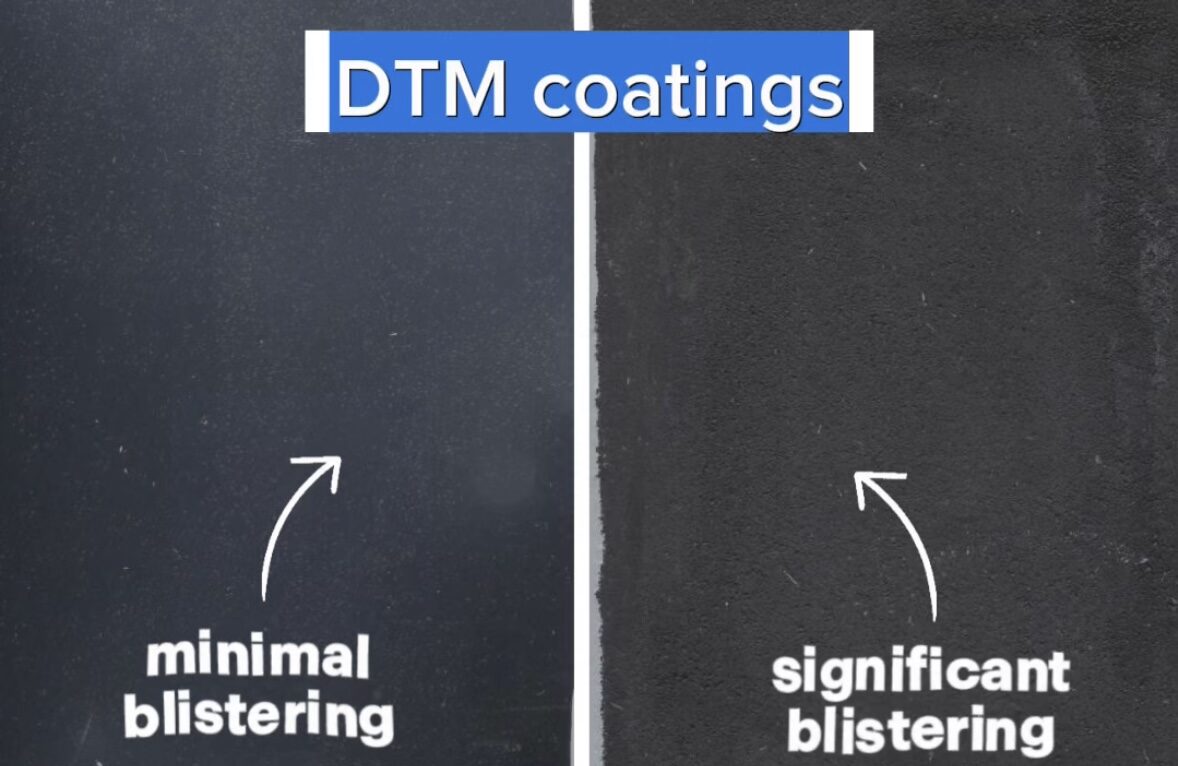
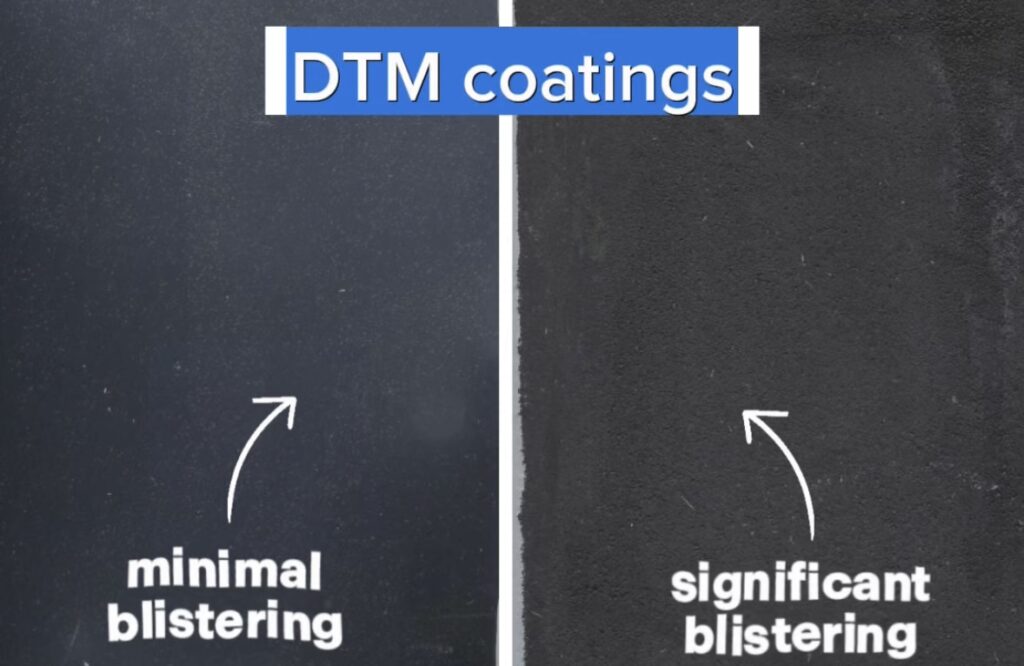
The image below shows a simple but powerful comparison of two Direct-to-Metal (DTM) coatings formulated with different binders.
What do we observe?
➡️ Left: Smooth surface with minimal blistering after humidity chamber exposure.
➡️ Right: Rough surface with significant blistering, indicating poorer moisture resistance.
Although both coatings were formulated similarly, the choice of binder made a significant difference in performance.
This demonstrates how humidity testing can be an effective tool for:
✔ Comparing different binder technologies
✔ Optimizing coating formulations
✔ Predicting long-term durability in humid environments
Sometimes, changing just one raw material can completely alter the performance of a coating.
At CoatEdge Dynamics, we help customers compare formulations and understand how individual components influence coating performance through standardized laboratory testing.